


Your Journey, Our Expertise...
Menu

Everest Base Camp Trek

15 Days • Moderate • Best season: March - June and September - January
Everest Base Camp Trek

Overview

The Everest Base Camp Trek – 13 Days is a legendary adventure that blends high-altitude trekking, rich Sherpa culture, and the breathtaking landscapes of the Himalayas. This shorter version of the classic trek is designed for trekkers who want the full Everest experience in a tighter timeframe, without missing the key highlights of the journey.

Your adventure starts with an exhilarating flight from Kathmandu to Lukla, the gateway to the Everest region. From there, you’ll follow the Dudh Koshi River, passing through charming Sherpa villages such as Phakding and Namche Bazaar. Namche, often called the "Sherpa capital," offers a chance to experience local traditions while adjusting to the altitude. Suspension bridges, prayer flags, mani walls, and centuries-old monasteries mark the trail, reflecting the deep Buddhist roots of the region.

As the trek continues through Tengboche and Dingboche, the scenery shifts to rugged alpine landscapes with glaciers and towering snow-capped peaks like Ama Dablam, Lhotse, Nuptse, and, of course, Everest itself. The highlight of the journey is reaching Everest Base Camp at 5,364 meters, where you’ll stand at the foot of the world’s highest mountain. To top it off, a sunrise hike to Kala Patthar offers unmatched panoramic views of Mount Everest glowing in golden light.

Along the way, trekkers stay in cozy tea houses, savor traditional Nepalese meals, and gain insights from experienced guides. Optional porters are available to ease the physical load, allowing you to focus fully on the trail and cultural experience. While the trek is moderately challenging, the 13-day itinerary is carefully paced to balance altitude acclimatization with a steady progression toward Base Camp.

By the end of this 13-day journey, you’ll return to Kathmandu with lifelong memories of Himalayan trails, Sherpa warmth, and the pride of standing beneath the world’s highest peak. The Everest Base Camp Trek is more than a trek it’s an unforgettable encounter with Nepal’s natural beauty, traditions, and high-altitude adventure.

Everest Base Camp Trek – Trip Highlights

  • Reach Everest Base Camp (5,364 m).
  • Sunrise over Everest from Kala Patthar (5,545 m).
  • Stunning views of Mount Everest, Lhotse, Nuptse & Ama Dablam.
  • Scenic Kathmandu–Lukla mountain flight.
  • Explore Namche Bazaar, the Sherpa capital.
  • Visit historic Tengboche Monastery.
  • Cross spectacular Khumbu suspension bridges.
  • Explore the Khumbu Glacier and Himalayan landscapes.
  • Trek through Sagarmatha National Park.
  • Experience authentic Sherpa culture and hospitality.
  • Enjoy one of the world's most famous Himalayan trekking adventures.

Meals & Accommodation During Everest Base Camp Trek

During the Everest Base Camp Trek, you will stay in comfortable local teahouses and lodges on a twin-sharing basis. Rooms are generally simple and clean, with shared bathrooms. Dining areas provide a warm and welcoming atmosphere, especially at higher elevations.

Meals include breakfast, lunch, and dinner, with options such as Dal Bhat, noodles, pasta, momo, soups, eggs, pancakes, vegetables, and Tibetan/Sherpa dishes. Vegetarian meals are available, along with tea, coffee, and other hot drinks.

Our Popular Other Trekking Packages

Gokyo Valley Trek: The Gokyo Valley Trek is a spectacular Everest-region adventure known for its turquoise glacial lakes, dramatic Himalayan landscapes, and panoramic views of Everest, Cho Oyu, Lhotse, and Makalu. The trek takes you through beautiful Sherpa villages of the Khumbu region, including Namche Bazaar and the stunning Gokyo Valley, with the opportunity to climb Gokyo Ri for one of the finest viewpoints in the Everest region. It is an excellent alternative to the classic Everest Base Camp Trek for travelers seeking breathtaking mountain scenery, peaceful trails, and a rewarding high-altitude trekking experience.

Everest Three Pass Trek: The Everest Three Pass Trek is one of Nepal's most challenging and adventurous trekking routes, crossing three spectacular high mountain passes—Renjo La, Cho La, and Kongma La—while exploring the remote valleys of the Everest region. Along the journey, trekkers experience stunning views of Mount Everest, Lhotse, Makalu, Cho Oyu, and Ama Dablam, while visiting highlights such as Gokyo Lakes, Everest Base Camp, and Kala Patthar. This trek is ideal for experienced trekkers looking for a demanding Himalayan adventure combining high-altitude passes, dramatic landscapes, Sherpa culture, and some of the best mountain views in Nepal.

Pikey Peak Trek: The Pikey Peak Trek is a relatively short and peaceful trekking adventure in the lower Everest region, famous for its spectacular sunrise and sunset views over the Himalayan range. From Pikey Peak, trekkers can enjoy panoramic views of Mount Everest, Makalu, Kanchenjunga, Lhotse, and several other Himalayan peaks. The trail passes through beautiful forests, traditional Sherpa villages, Buddhist monasteries, and less-crowded mountain landscapes, making the Pikey Peak Trek an excellent choice for travelers seeking an authentic cultural experience, stunning Himalayan scenery, and a quieter alternative to the busier Everest trekking routes.

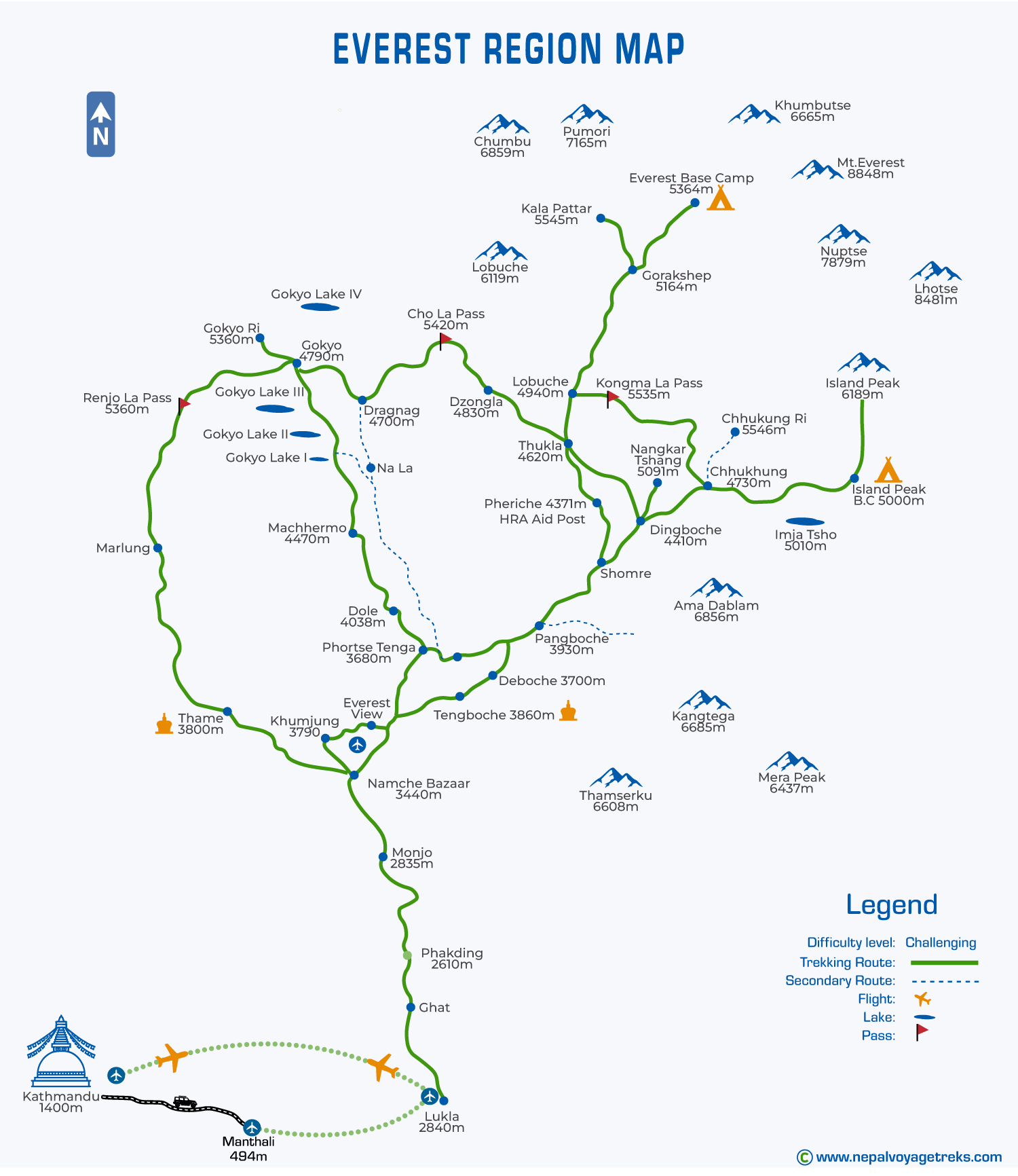
Trip Map
route map

Everest Base Camp Trek

Trekking & Hiking Adventure

Region Everest Region
Duration 15 Days
Grade Moderate
Meal B/L/D
Group Size 1-30
Accomodation Hotel/Lodge/Camp
Best Season March - June and September - January
Start/End Kathmandu
Max Altitude 5545
Activity Trekking
Day 1 — Arrival in Kathmandu
Elevation 1350 m

arrivel

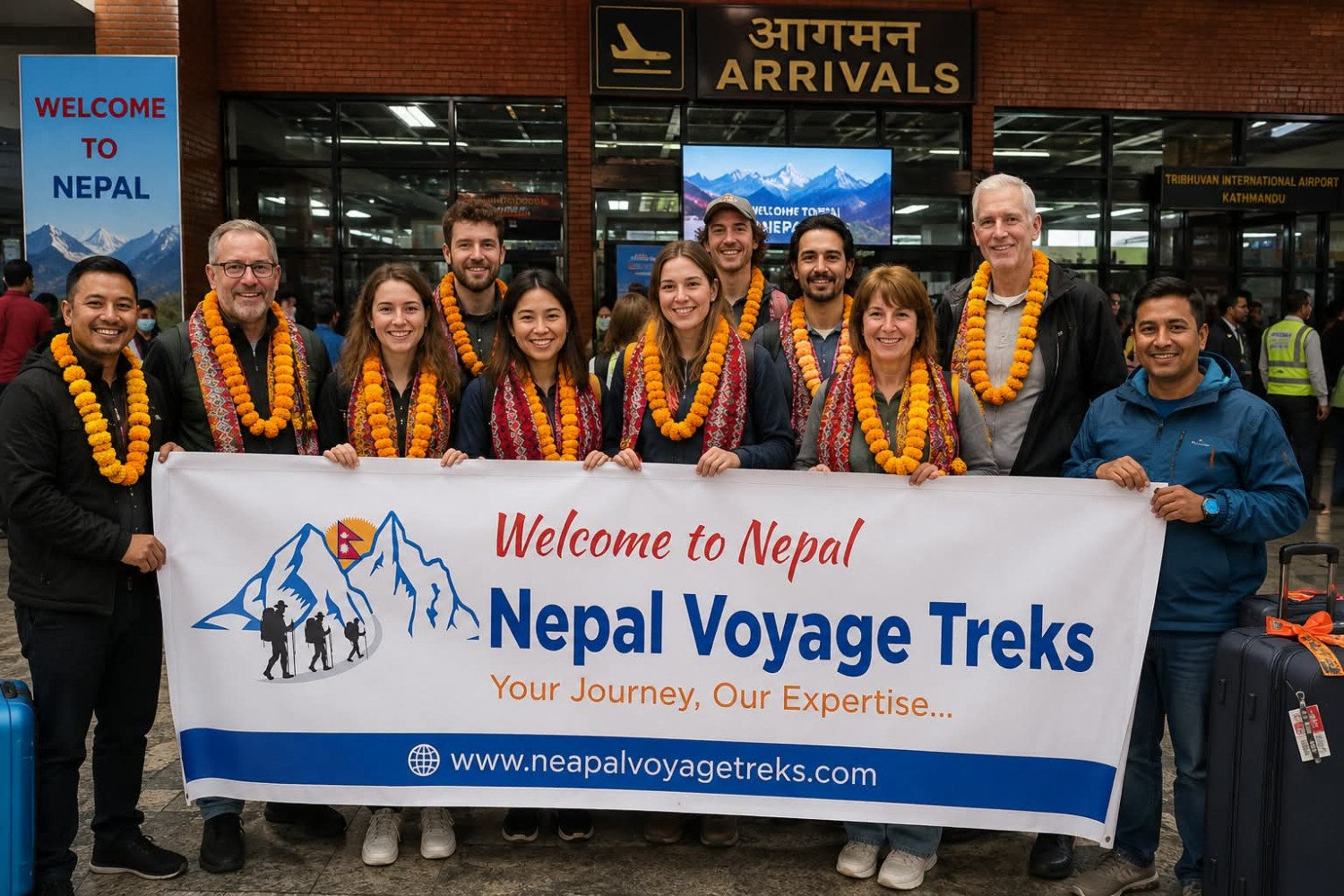
Upon arrival at Tribhuvan International Airport in Kathmandu, travelers are warmly welcomed by their guide and driver. After clearing immigration and collecting luggage, you’ll be transferred to your hotel in the city, where you can rest, refresh, and recover from your international flight. Depending on your arrival time, you may have the opportunity to explore the vibrant streets of Thamel, the main tourist hub, or enjoy a traditional Nepali meal at a local restaurant.

Kathmandu, the capital of Nepal, is a fascinating city that blends ancient culture with modern life. You’ll notice the bustling markets, colorful temples, prayer flags fluttering in the wind, and historic architecture as you walk through its streets. This day is primarily for adjusting to the city’s rhythm, resting, and preparing for your upcoming trekking adventure or sightseeing tour. Your guide will also provide a briefing on the trek ahead, including tips on packing, acclimatization, and local customs. Overnight stay is at a comfortable hotel in Kathmandu, offering a convenient base to begin your Nepal journey.


Accomodation: Hotel
Meals: Lunch & Dinner
Duration: 1 Hour
Day 2 — Flight from Kathmandu to Lukla (2,840m) and Trek to Phakding (2,610m)
Ups ↑ 200 m
Down ↓ 430 m
Elevation 2840 m
Distance ⟺ 8 km

The adventure begins with a short but thrilling 30–35 minute flight from Kathmandu to Lukla (2,840 m). On clear mornings, the flight offers spectacular views of Langtang Himal, Gauri Shankar, and even Everest in the distance. Landing at the famous Tenzing-Hillary Airport is unforgettable, with its short sloping runway perched on the mountainside.

After a quick tea or breakfast stop in Lukla, the trek starts with a gentle descent through pine forests and terraced fields, leading into the Khumbu Valley. The trail follows the Dudh Koshi River, crossing several suspension bridges covered in prayer flags. Along the way, you’ll pass Chheplung village, with its first good view of Kusum Kanguru (6,367 m), and Thado Koshi, another riverside village.

Lunch is usually taken at Ghat (2,530 m), a small settlement decorated with mani walls, chortens, and prayer wheels. From here, it’s an easy walk of about an hour and a half to Phakding (2,610 m), a peaceful riverside village surrounded by pine trees. On clear days, you may spot Thamserku (6,608 m) above the valley.

The evening is spent in a cozy lodge, enjoying a warm meal and the sound of the Dudh Koshi rushing by.

Accomodation: Lodge
Meals: Breakfast, Lunch, Dinner
Duration: 3-4 hours trek
Day 3 — Trek from Phakding (2,610m) to Namche Bazaar (3,440m)
Ups ↑ 830 m
Down ↓ 000 m
Elevation 3440 m
Distance ⟺ 10-11 km

After breakfast in Phakding, the trail follows the Dudh Koshi River, passing small Sherpa villages like Tok Tok and Benkar, where you’ll enjoy views of Thamserku (6,608m) and Kusum Kanguru. Soon after, you’ll reach Monjo (2,835m), the gateway to Sagarmatha National Park, where permits are checked. From here, a short descent leads to Jorsalle (2,740m), the last settlement before Namche and the usual lunch stop, surrounded by pine and rhododendron forest.

After lunch, the path continues along the river until you reach the thrilling Hillary Suspension Bridge, one of the highest and longest bridges on the trek, decorated with colorful prayer flags. Crossing it marks the start of a steady uphill climb toward Namche. The ascent is challenging but rewarding, as midway up you may glimpse Mount Everest for the first time behind the ridge of Lhotse and Nuptse. Eventually, the trail opens into the natural amphitheater of Namche Bazaar (3,440m) — the vibrant Sherpa capital filled with tea houses, shops, and bakeries. Here, you’ll spend the night in a cozy lodge, resting for the acclimatization day ahead.

Accomodation: Lodge
Meals: Breakfast, Lunch, Dinner
Duration: 5-6 hours
Day 4 — Acclimatization Day in Namche Bazaar (3,440m)
Ups ↑ 170 m
Down ↓ 170 m
Elevation 3610 m
Distance ⟺ 5-6 km

Namche Bazaar is the Sherpa capital and a crucial stop for altitude acclimatization. The town is lively, built in a natural amphitheater with colorful houses, shops, bakeries, and internet cafés. After breakfast, trekkers often take a short walk to the Sherpa Culture Museum, where you can learn about local traditions, mountaineering history, and the famous Everest expeditions. For those wanting moderate exercise to aid acclimatization, a popular option is hiking to the Everest View Hotel (3,880m) or Syangboche Airport area (3,810m). Both spots offer breathtaking views of Everest, Lhotse, Nuptse, Ama Dablam, and Thamserku, making it a perfect opportunity for photos and mountain observation without a strenuous climb.

Lunch is typically enjoyed at a local tea house in Namche, with options like dal bhat, noodles, or fried rice, giving you energy for the afternoon. In the afternoon, you can stroll around Namche Bazaar’s main streets, visit small monasteries, mani walls, and prayer wheels, or simply relax and enjoy the Himalayan panorama from the town’s viewpoints. Staying in a cozy tea house overnight allows your body to adjust to the altitude, preparing you for the more challenging climbs ahead toward Tengboche and Dingboche.

Accomodation: Lodge
Meals: Breakfast, Lunch, Dinner
Duration: 4-5 hours
Day 5 — Trek from Namche Bazaar (3,440m) to Tengboche (3,860m)
Ups ↑ 420 m
Down ↓ 000 m
Elevation 3860 m
Distance ⟺ 9 km

Leaving Namche Bazaar after breakfast, the trail follows a gentle uphill path through pine and rhododendron forests, offering immediate views of Ama Dablam, Thamserku, and Kangtega. The path initially descends slightly toward the Dudh Koshi tributaries, crossing a few small wooden suspension bridges, which provide excellent photo opportunities of the rushing rivers and surrounding cliffs. Along the way, trekkers pass Khumjung village, famous for its ancient monastery and Hillary School, showcasing traditional Sherpa architecture and culture.

After Khumjung, the trail gradually climbs uphill toward Tengboche (3,860m), one of the most important spiritual centers in the Khumbu region. The Tengboche Monastery, perched on a ridge with panoramic views, dominates the village and is a highlight of the trek. From here, you can see Everest, Lhotse, Nuptse, Ama Dablam, and Thamserku in a single breathtaking vista. Lunch is usually enjoyed at a local tea house in Tengboche, where you can rest and soak in the mountain panorama. In the evening, you’ll stay in a cozy tea house in Tengboche, surrounded by prayer flags and the serene ambiance of the monastery, preparing for the next day’s trek to Dingboche.

Accomodation: Lodge
Meals: Breakfast, Lunch, Dinner
Duration: 5-6 hours
Day 6 — Trek from Tengboche (3,860m) to Dingboche (4,410m)
Ups ↑ 550 m
Down ↓ 000 m
Elevation 4410 m
Distance ⟺ 11 km

After breakfast in Tengboche, the trail descends gently through mixed pine and birch forests, offering close-up views of Ama Dablam, Lhotse, and Nuptse. You’ll cross several small streams and pass through charming villages like Pangboche (3,985m), home to the famous Pangboche Monastery, one of the oldest in the Khumbu region. This village provides excellent photo opportunities of Ama Dablam rising sharply behind the settlement.

Beyond Pangboche, the trail gradually climbs through alpine terrain, moving above the treeline into open landscapes dotted with mani walls and prayer flags. The path offers panoramic views of Cholatse, Tawache, and Ama Dablam as you approach Dingboche (4,410m), a picturesque valley settlement. Here, trekkers can enjoy lunch at a local tea house, which usually serves dal bhat, noodles, or soups to fuel up for acclimatization. You’ll spend the night in a cozy tea house in Dingboche, resting and preparing for the next day’s optional acclimatization hike to Nangkartshang Peak or the surrounding ridges.

Accomodation: Lodge
Meals: Breakfast, Lunch, Dinner
Duration: 5-6 hours
Day 7 — Acclimatization Day in Dingboche (4,410m)
Ups ↑ 190 m
Down ↓ 190 m
Elevation 4600 m
Distance ⟺ 4-5 km